
The Baptist Catechism
Modernized from the 1693 original — commonly called Keach’s Catechism
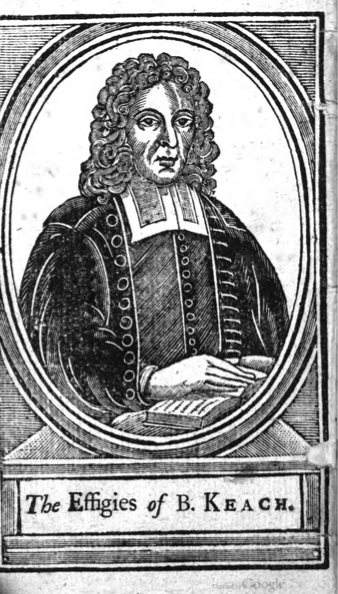
Adopted by the Particular Baptist General Assembly in 1693 and modeled on the Westminster Shorter Catechism, the Baptist Catechism teaches the faith of the 1689 confession in question and answer — written to be learned by heart, in families and in the church. This edition is modernized into reverent contemporary English for U.S.M.C. Ministries.
For Gideon, Boaz, and Shiloh — and for every household keeping watch.
117 questions · 15 sections · with Scripture proofs
About this catechism
The Baptist Catechism was commissioned by the 1693 General Assembly of Particular Baptists and is traditionally attributed to Benjamin Keach, though it was likely drafted by William Collins, Keach’s fellow author of the 1689 confession. It follows the order and much of the wording of the Westminster Shorter Catechism, departing where Baptist conviction requires — most notably on baptism.
This is a U.S.M.C. Ministries edition: the original 114 questions modernized into reverent contemporary English from the public-domain 1693 text — the archaic thee, thou, and shalt brought into the language we actually speak and teach — with three further questions (115–117) added for the Christian household. The doctrine is unchanged; only the language is renewed. Each answer’s Scripture proof-texts link into the MOOP Bible Translation Engine, and theological terms link to the MOOP Dictionary.
Note on sections: the original catechism has no printed section titles; the headings below are editorial reading aids that follow its clear structure.
Find a question
God and the Knowledge of Him
Q2. Ought everyone to believe there is a God? 
A. Everyone ought to believe there is a God; and it is their great sin and folly who do not.
Proof-texts
The Holy Scriptures
Q4. What is the Word of God? 
A. The holy Scriptures of the Old and New Testament are the Word of God, and the only certain rule of faith and obedience.
Proof-texts
Q5. May all men make use of the holy Scriptures? 
A. All men are not only permitted, but commanded and exhorted to read, hear, and understand the holy Scriptures.
Proof-texts
Q6. What things are chiefly contained in the holy Scriptures? 
A. The holy Scriptures chiefly contain what man ought to believe concerning God, and what duty God requires of man.
Proof-texts
The Nature and Persons of God
Q7. What is God? 
A. God is a Spirit, infinite, eternal, and unchangeable in his being, wisdom, power, holiness, justice, goodness, and truth.
Proof-texts
Q9. How many persons are there in the Godhead? 
A. There are three persons in the Godhead, the Father, the Son, and the Holy Spirit; and these three are one God, the same in essence, equal in power and glory.
Proof-texts
God's Decrees, Creation, and Providence
Q10. What are the decrees of God? 
A. The decrees of God are his eternal purpose according to the counsel of his will, by which, for his own glory, he has foreordained whatever comes to pass.
Proof-texts
Q11. How does God carry out his decrees? 
A. God carries out his decrees in the works of creation and providence.
Proof-texts
Q12. What is the work of creation? 
A. The work of creation is God's making all things out of nothing, by the word of his power, in the space of six days, and all very good.
Proof-texts
Q13. How did God create man? 
A. God created man, male and female, after his own image, in knowledge, righteousness, and holiness, with dominion over the creatures.
Proof-texts
Q14. What are God's works of providence? 
A. God's works of providence are his most holy, wise, and powerful preserving and governing all his creatures, and all their actions.
Proof-texts
Q15. What special act of providence did God exercise toward man in the estate in which he was created? 
A. When God had created man, he entered into a covenant of life with him on condition of perfect obedience; forbidding him to eat of the tree of the knowledge of good and evil, on pain of death.
Proof-texts
The Fall and the Estate of Sin and Misery
Q16. Did our first parents continue in the estate in which they were created? 
A. Our first parents, being left to the freedom of their own will, fell from the estate in which they were created, by sinning against God.
Proof-texts
Q17. What is sin? 
A. Sin is any lack of conformity to, or transgression of, the law of God.
Proof-texts
Q18. What was the sin by which our first parents fell from the estate in which they were created? 
A. The sin by which our first parents fell from the estate in which they were created, was their eating the forbidden fruit.
Proof-texts
Q19. Did all mankind fall in Adam's first transgression? 
A. The covenant being made with Adam, not only for himself but for his posterity, all mankind descending from him by ordinary generation sinned in him, and fell with him in his first transgression.
Proof-texts
Q20. Into what estate did the fall bring mankind? 
A. The fall brought mankind into an estate of sin and misery.
Proof-texts
Q21. In what does the sinfulness of that estate into which man fell consist? 
A. The sinfulness of that estate into which man fell consists in the guilt of Adam's first sin, the lack of original righteousness, and the corruption of his whole nature, which is commonly called original sin; together with all actual transgressions which proceed from it.
Proof-texts
Christ the Redeemer and His Work
Q23. Did God leave all mankind to perish in the estate of sin and misery? 
A. God, having out of his mere good pleasure, from all eternity, elected some to everlasting life, did enter into a covenant of grace, to deliver them out of the estate of sin and misery, and to bring them into an estate of salvation by a Redeemer.
Proof-texts
Q24. Who is the Redeemer of God's elect? 
A. The only Redeemer of God's elect is the Lord Jesus Christ; who, being the eternal Son of God, became man, and so was and continues to be God and man in two distinct natures, and one person forever.
Proof-texts
Q25. How did Christ, being the Son of God, become man? 
A. Christ the Son of God became man by taking to himself a true body and a reasonable soul; being conceived by the power of the Holy Spirit in the womb of the Virgin Mary, and born of her, yet without sin.
Proof-texts
Q26. What offices does Christ execute as our Redeemer? 
A. Christ as our Redeemer executes the offices of a prophet, of a priest, and of a king, both in his estate of humiliation and exaltation.
Proof-texts
Q27. How does Christ execute the office of a prophet? 
A. Christ executes the office of a prophet in revealing to us, by his Word and Spirit, the will of God for our salvation.
Proof-texts
Q28. How does Christ execute the office of a priest? 
A. Christ executes the office of a priest in his once offering up himself a sacrifice to satisfy divine justice and reconcile us to God, and in making continual intercession for us.
Proof-texts
Q29. How does Christ execute the office of a king? 
A. Christ executes the office of a king in subduing us to himself, in ruling and defending us, and in restraining and conquering all his and our enemies.
Proof-texts
Q30. In what did Christ's humiliation consist? 
A. Christ's humiliation consisted in his being born, and that in a low condition, made under the law, undergoing the miseries of this life, the wrath of God, and the cursed death of the cross; in being buried, and continuing under the power of death for a time.
Proof-texts
Redemption Applied: Calling and Its Benefits
Q32. How are we made partakers of the redemption purchased by Christ? 
A. We are made partakers of the redemption purchased by Christ by the effectual application of it to us by his Holy Spirit.
Proof-texts
Q33. How does the Spirit apply to us the redemption purchased by Christ? 
A. The Spirit applies to us the redemption purchased by Christ by working faith in us, and thereby uniting us to Christ, in our effectual calling.
Proof-texts
Q34. What is effectual calling? 
A. Effectual calling is the work of God's Spirit, by which, convincing us of our sin and misery, enlightening our minds in the knowledge of Christ, and renewing our wills, he does persuade and enable us to embrace Jesus Christ freely offered to us in the gospel.
Proof-texts
Q35. What benefits do those who are effectually called partake of in this life? 
A. Those who are effectually called do in this life partake of justification, adoption, sanctification, and the several benefits which in this life do either accompany or flow from them.
Proof-texts
Q36. What is justification? 
A. Justification is an act of God's free grace, in which he pardons all our sins, and accepts us as righteous in his sight, only for the righteousness of Christ imputed to us, and received by faith alone.
Proof-texts
Q37. What is adoption? 
A. Adoption is an act of God's free grace, by which we are received into the number and have a right to all the privileges of the sons of God.
Proof-texts
Q38. What is sanctification? 
A. Sanctification is the work of God's free grace, by which we are renewed in the whole man after the image of God, and are enabled more and more to die to sin, and live to righteousness.
Proof-texts
Q39. What are the benefits which in this life do accompany or flow from justification, adoption, and sanctification? 
A. The benefits which in this life do accompany or flow from justification, adoption, and sanctification, are assurance of God's love, peace of conscience, joy in the Holy Spirit, increase of grace, and perseverance in it to the end.
Proof-texts
Benefits at Death, Resurrection, and Judgment
Q40. What benefits do believers receive from Christ at their death? 
A. The souls of believers are at their death made perfect in holiness, and do immediately pass into glory; their bodies, being still united to Christ, do rest in their graves till the resurrection.
Proof-texts
Q41. What benefits do believers receive from Christ at the resurrection? 
A. At the resurrection believers, being raised up in glory, shall be openly acknowledged and acquitted in the day of judgment, and made perfectly blessed, both in soul and body, in the full enjoyment of God to all eternity.
Proof-texts
Q42. But what shall be done to the wicked at their death? 
A. The souls of the wicked shall, at their death, be cast into the torments of hell, and their bodies lie in their graves, until the resurrection and judgment of the great day.
Proof-texts
Q43. What shall be done to the wicked at the day of judgment? 
A. At the day of judgment the bodies of the wicked, being raised out of their graves, shall be sentenced, together with their souls, to unspeakable torments with the devil and his angels for ever.
Proof-texts
The Moral Law and Its Summary
Q44. What is the duty which God requires of man? 
A. The duty which God requires of man is obedience to his revealed will.
Proof-texts
Q45. What did God at first reveal to man for the rule of his obedience? 
A. The rule which God at first revealed to man for his obedience was the moral law.
Proof-texts
Q46. Where is the moral law summarily comprehended? 
A. The moral law is summarily comprehended in the ten commandments.
Proof-texts
Q47. What is the sum of the ten commandments? 
A. The sum of the ten commandments is to love the Lord our God with all our heart, with all our soul, with all our strength, and with all our mind; and our neighbour as ourselves.
Proof-texts
Q48. What is the preface to the ten commandments? 
A. The preface to the ten commandments is in these words: I am the Lord your God, who have brought you out of the land of Egypt, out of the house of bondage.
Proof-texts
Q49. What does the preface to the ten commandments teach us? 
A. The preface to the ten commandments teaches us that because God is the Lord, and our God and Redeemer, therefore we are bound to keep all his commandments.
Proof-texts
The First Table: Duty Toward God
Q50. Which is the first commandment? 
A. The first commandment is, You shall have no other gods before me.
Proof-texts
Q51. What is required in the first commandment? 
A. The first commandment requires us to know and acknowledge God to be the only true God and our God, and to worship and glorify him accordingly.
Proof-texts
Q52. What is forbidden in the first commandment? 
A. The first commandment forbids the denying, or not worshipping and glorifying the true God, and the giving of that worship and glory to any other, which is due to him alone.
Proof-texts
Q53. What are we especially taught by these words, "before me," in the first commandment? 
A. These words, "before me," in the first commandment teach us that God, who sees all things, takes notice of and is much displeased with the sin of having any other God.
Proof-texts
Q54. Which is the second commandment? 
A. The second commandment is, You shall not make to yourself any graven image, or any likeness of anything that is in heaven above, or that is in the earth beneath, or that is in the water under the earth; you shall not bow down yourself to them, nor serve them; for I the Lord your God am a jealous God, visiting the iniquity of the fathers upon the children to the third and fourth generation of them that hate me; and showing mercy to thousands of them that love me, and keep my commandments.
Proof-texts
Q55. What is required in the second commandment? 
A. The second commandment requires the receiving, observing, and keeping pure and entire all such religious worship and ordinances as God has appointed in his Word.
Proof-texts
Q56. What is forbidden in the second commandment? 
A. The second commandment forbids the worshipping of God by images or any other way not appointed in his Word.
Proof-texts
Q57. What are the reasons attached to the second commandment? 
A. The reasons attached to the second commandment are God's sovereignty over us, his ownership in us, and the zeal he has for his own worship.
Proof-texts
Q58. Which is the third commandment? 
A. The third commandment is, You shall not take the name of the Lord your God in vain; for the Lord will not hold him guiltless that takes his name in vain.
Proof-texts
Q59. What is required in the third commandment? 
A. The third commandment requires the holy and reverent use of God's names, titles, attributes, ordinances, Word, and works.
Proof-texts
Q60. What is forbidden in the third commandment? 
A. The third commandment forbids all profaning and abusing of anything by which God makes himself known.
Proof-texts
Q61. What is the reason attached to the third commandment? 
A. The reason attached to the third commandment is that, however the breakers of this commandment may escape punishment from men, yet the Lord our God will not allow them to escape his righteous judgment.
Proof-texts
Q62. What is the fourth commandment? 
A. The fourth commandment is, Remember the Sabbath day to keep it holy; six days you shall labor and do all your work; but the seventh day is the Sabbath of the Lord your God, in it you shall not do any work, you, nor your son, nor your daughter, nor your manservant, nor your maidservant, nor your cattle, nor the stranger that is within your gates; for in six days the Lord made heaven and earth, the sea, and all that in them is, and rested the seventh day; therefore the Lord blessed the Sabbath day and hallowed it.
Proof-texts
Q63. What is required in the fourth commandment? 
A. The fourth commandment requires the keeping holy to God one whole day in seven to be a Sabbath to himself.
Proof-texts
Q64. Which day of the seven has God appointed to be the weekly Sabbath? 
A. Before the resurrection of Christ, God appointed the seventh day of the week to be the weekly Sabbath; and the first day of the week ever since, to continue to the end of the world, which is the Christian Sabbath.
Proof-texts
Q65. How is the Sabbath to be sanctified? 
A. The Sabbath is to be sanctified by a holy resting all that day, even from such worldly employments and recreations as are lawful on other days; and spending the whole time in the public and private exercises of God's worship, except so much as is to be taken up in the works of necessity and mercy.
Proof-texts
Q66. What is forbidden in the fourth commandment? 
A. The fourth commandment forbids the omission or careless performance of the duties required, and the profaning the day by idleness, or doing that which is in itself sinful, or by unnecessary thoughts, words, or works about worldly employments or recreations.
Proof-texts
The Second Table: Duty Toward Man
Q68. Which is the fifth commandment? 
A. The fifth commandment is, Honor your father and your mother; that your days may be long in the land which the Lord your God gives you.
Proof-texts
Q69. What is required in the fifth commandment? 
A. The fifth commandment requires the preserving the honor and performing the duties belonging to everyone in their various places and relations, as superiors, inferiors, or equals.
Proof-texts
Q70. What is forbidden in the fifth commandment? 
A. The fifth commandment forbids the neglect of, or doing anything against, the honor and duty which belongs to everyone in their various places and relations.
Proof-texts
Q71. What is the reason attached to the fifth commandment? 
A. The reason attached to the fifth commandment is a promise of long life and prosperity (as far as it shall serve for God's glory and their own good) to all who keep this commandment.
Proof-texts
Q73. What is required in the sixth commandment? 
A. The sixth commandment requires all lawful efforts to preserve our own life and the life of others.
Proof-texts
Q74. What is forbidden in the sixth commandment? 
A. The sixth commandment absolutely forbids the taking away of our own life, or the life of our neighbor unjustly, or whatever tends to it.
Proof-texts
Q75. What is the seventh commandment? 
A. The seventh commandment is, You shall not commit adultery.
Proof-texts
Q76. What is required in the seventh commandment? 
A. The seventh commandment requires the preservation of our own and our neighbor's chastity, in heart, speech, and behavior.
Proof-texts
Q77. What is forbidden in the seventh commandment? 
A. The seventh commandment forbids all unchaste thoughts, words, and actions.
Proof-texts
Q79. What is required in the eighth commandment? 
A. The eighth commandment requires the lawful gaining and furthering of the wealth and outward estate of ourselves and others.
Proof-texts
Q80. What is forbidden in the eighth commandment? 
A. The eighth commandment forbids whatever does or may unjustly hinder our own or our neighbor's wealth or outward estate.
Proof-texts
Q81. Which is the ninth commandment? 
A. The ninth commandment is, You shall not bear false witness against your neighbor.
Proof-texts
Q82. What is required in the ninth commandment? 
A. The ninth commandment requires the maintaining and promoting of truth between man and man, and of our own and our neighbor's good name, especially in witness bearing.
Proof-texts
Q83. What is forbidden in the ninth commandment? 
A. The ninth commandment forbids whatever is prejudicial to the truth, or injurious to our own or our neighbor's good name.
Proof-texts
Q84. Which is the tenth commandment? 
A. The tenth commandment is, You shall not covet your neighbor's house, you shall not covet your neighbor's wife, nor his man-servant, nor his maid-servant, nor his ox, nor his ass, nor anything that is your neighbor's.
Proof-texts
Q85. What is required in the tenth commandment? 
A. The tenth commandment requires full contentment with our own condition, with a right and charitable frame of spirit toward our neighbor, and all that is his.
Proof-texts
Q86. What is forbidden in the tenth commandment? 
A. The tenth commandment forbids all discontentment with our own estate, envying or grieving at the good of our neighbor, and all inordinate motions and affections to anything that is his.
Proof-texts
Sin and the Way of Escape
Q87. Is any man able perfectly to keep the commandments of God? 
A. No mere man since the fall is able in this life perfectly to keep the commandments of God, but daily breaks them in thought, word, or deed.
Proof-texts
Q88. Are all transgressions of the law equally heinous? 
A. Some sins in themselves, and by reason of several aggravations, are more heinous in the sight of God than others.
Proof-texts
Q89. What does every sin deserve? 
A. Every sin deserves God's wrath and curse, both in this life and that which is to come.
Proof-texts
Q90. What does God require of us that we may escape his wrath and curse, due to us for sin? 
A. To escape the wrath and curse of God due to us for sin, God requires of us faith in Jesus Christ, repentance to life, with the diligent use of all the outward means by which Christ communicates to us the benefits of redemption.
Proof-texts
Q91. What is faith in Jesus Christ? 
A. Faith in Jesus Christ is a saving grace, by which we receive and rest upon him alone for salvation, as he is offered to us in the gospel.
Proof-texts
Q92. What is repentance to life? 
A. Repentance to life is a saving grace, by which a sinner, out of a true sense of his sin and an understanding of the mercy of God in Christ, turns from his sin to God, with grief and hatred of his sin, and with full purpose of and effort after new obedience.
Proof-texts
The Means of Grace: The Word and the Ordinances
Q93. What are the outward means by which Christ communicates to us the benefits of redemption? 
A. The outward and ordinary means by which Christ communicates to us the benefits of redemption are his ordinances, especially the Word, baptism, the Lord's Supper, and prayer; all of which means are made effectual to the elect for salvation.
Proof-texts
Q94. How is the Word made effectual to salvation? 
A. The Spirit of God makes the reading, but especially the preaching, of the Word an effectual means of convincing and converting sinners, and of building them up in holiness and comfort through faith to salvation.
Proof-texts
Q95. How is the Word to be read and heard, that it may become effectual to salvation? 
A. That the Word may become effectual to salvation, we must attend to it with diligence, preparation, and prayer; receive it with faith and love, lay it up in our hearts, and practice it in our lives.
Proof-texts
Q96. How do baptism and the Lord's Supper become effectual means of salvation? 
A. Baptism and the Lord's Supper become effectual means of salvation, not for any virtue in them, or in him that administers them, but only by the blessing of Christ, and the working of the Spirit in those who by faith receive them.
Proof-texts
Q97. What is baptism? 
A. Baptism is an ordinance of the New Testament instituted by Jesus Christ, to be to the party baptized a sign of his fellowship with him, in his death, burial, and resurrection; of his being grafted into him; of remission of sins; and of his giving up himself to God through Jesus Christ, to live and walk in newness of life.
Proof-texts
Q98. To whom is baptism to be administered? 
A. Baptism is to be administered to all those who actually profess repentance toward God, faith in and obedience to our Lord Jesus Christ, and to none other.
Proof-texts
Q99. Are the infants of those who are professing believers to be baptized? 
A. The infants of those who are professing believers are not to be baptized, because there is neither command nor example in the holy Scriptures, nor certain consequence from them, to baptize such.
Proof-texts
Q100. How is baptism rightly administered? 
A. Baptism is rightly administered by immersion, or dipping the whole body of the party in water, into the name of the Father, and of the Son, and of the Holy Spirit, according to Christ's institution, and the practice of the apostles, and not by sprinkling or pouring of water, or dipping some part of the body, after the tradition of men.
Proof-texts
Q101. What is the duty of those who are rightly baptized? 
A. It is the duty of those who are rightly baptized to give themselves up to some particular and orderly church of Jesus Christ, that they may walk in all the commandments and ordinances of the Lord blameless.
Proof-texts
Q102. What is the Lord's Supper? 
A. The Lord's Supper is an ordinance of the New Testament, instituted by Jesus Christ, in which, by giving and receiving bread and wine according to his appointment, his death is shown forth; and the worthy receivers are, not in a corporal and carnal manner, but by faith, made partakers of his body and blood, with all his benefits, to their spiritual nourishment and growth in grace.
Proof-texts
Q103. Who are the proper subjects of this ordinance? 
A. Those who have been baptized upon a personal profession of their faith in Jesus Christ, and repentance from dead works.
Proof-texts
Q104. What is required for the worthy receiving of the Lord's Supper? 
A. It is required of those who would worthily partake of the Lord's Supper that they examine themselves of their knowledge to discern the Lord's body, of their faith to feed upon him, of their repentance, love, and new obedience, lest coming unworthily they eat and drink judgment to themselves.
Prayer and the Lord's Prayer
Q105. What is prayer? 
A. Prayer is an offering up of our desires to God, by the assistance of the Holy Spirit, for things agreeable to his will, in the name of Christ, believing, with confession of our sins, and thankful acknowledgment of his mercies.
Proof-texts
Q106. What rule has God given for our direction in prayer? 
A. The whole Word of God is of use to direct us in prayer; but the special rule of direction is that prayer which Christ taught his disciples, commonly called the Lord's Prayer.
Proof-texts
Q107. What does the preface of the Lord's Prayer teach us? 
A. The preface of the Lord's Prayer, which is, Our Father who are in heaven, teaches us to draw near to God with all holy reverence and confidence, as children to a father, able and ready to help us; and that we should pray with and for others.
Proof-texts
Q108. What do we pray for in the first petition? 
A. In the first petition, which is, Hallowed be your name, we pray that God would enable us and others to glorify him in all that by which he makes himself known, and that he would dispose all things to his own glory.
Proof-texts
Q109. What do we pray for in the second petition? 
A. In the second petition, which is, Your kingdom come, we pray that Satan's kingdom may be destroyed, and that the kingdom of grace may be advanced, ourselves and others brought into it and kept in it, and that the kingdom of glory may be hastened.
Proof-texts
Q110. What do we pray for in the third petition? 
A. In the third petition, which is, Your will be done on earth as it is in heaven, we pray that God by his grace would make us able and willing to know, obey, and submit to his will in all things, as the angels do in heaven.
Proof-texts
Q111. What do we pray for in the fourth petition? 
A. In the fourth petition, which is, Give us this day our daily bread, we pray that of God's free gift we may receive a sufficient portion of the good things of this life, and enjoy his blessing with them.
Proof-texts
Q112. What do we pray for in the fifth petition? 
A. In the fifth petition, which is, And forgive us our debts as we forgive our debtors, we pray that God, for Christ's sake, would freely pardon all our sins, which we are the rather encouraged to ask because by his grace we are enabled from the heart to forgive others.
Proof-texts
Q113. What do we pray for in the sixth petition? 
A. In the sixth petition, which is, And lead us not into temptation but deliver us from evil, we pray that God would either keep us from being tempted to sin, or support and deliver us when we are tempted.
Proof-texts
Q114. What does the conclusion of the Lord's Prayer teach? 
A. The conclusion of the Lord's Prayer, which is, For yours is the kingdom, and the power, and the glory, forever. Amen, teaches us to take our encouragement in prayer from God only, and in our prayers to praise him, ascribing kingdom, power, and glory to him. And in testimony of our desire and assurance to be heard, we say, Amen.
Proof-texts
The Household of Faith
Q115. What has God appointed the Christian home to be? 
A. God has appointed the Christian home to be a place of worship, where parents and children together fear the Lord — praying, singing his praise, and feeding on his Word — so that the knowledge of God is kept alive and handed on from one generation to the next.
Proof-texts
Q116. What does God require of parents? 
A. God requires parents to bring up their children in the instruction and discipline of the Lord: to teach them his Word diligently, to pray for them and with them, and to set before them a godly example — not trusting in their own labor, but in the grace of God to save.
Proof-texts
Q117. What does God require of children? 
A. God requires children to honor and obey their parents in the Lord, to receive with humility the faith taught to them, and to lay hold of Christ for themselves — that they may know the Lord in their own hearts and walk in his ways all their days.